
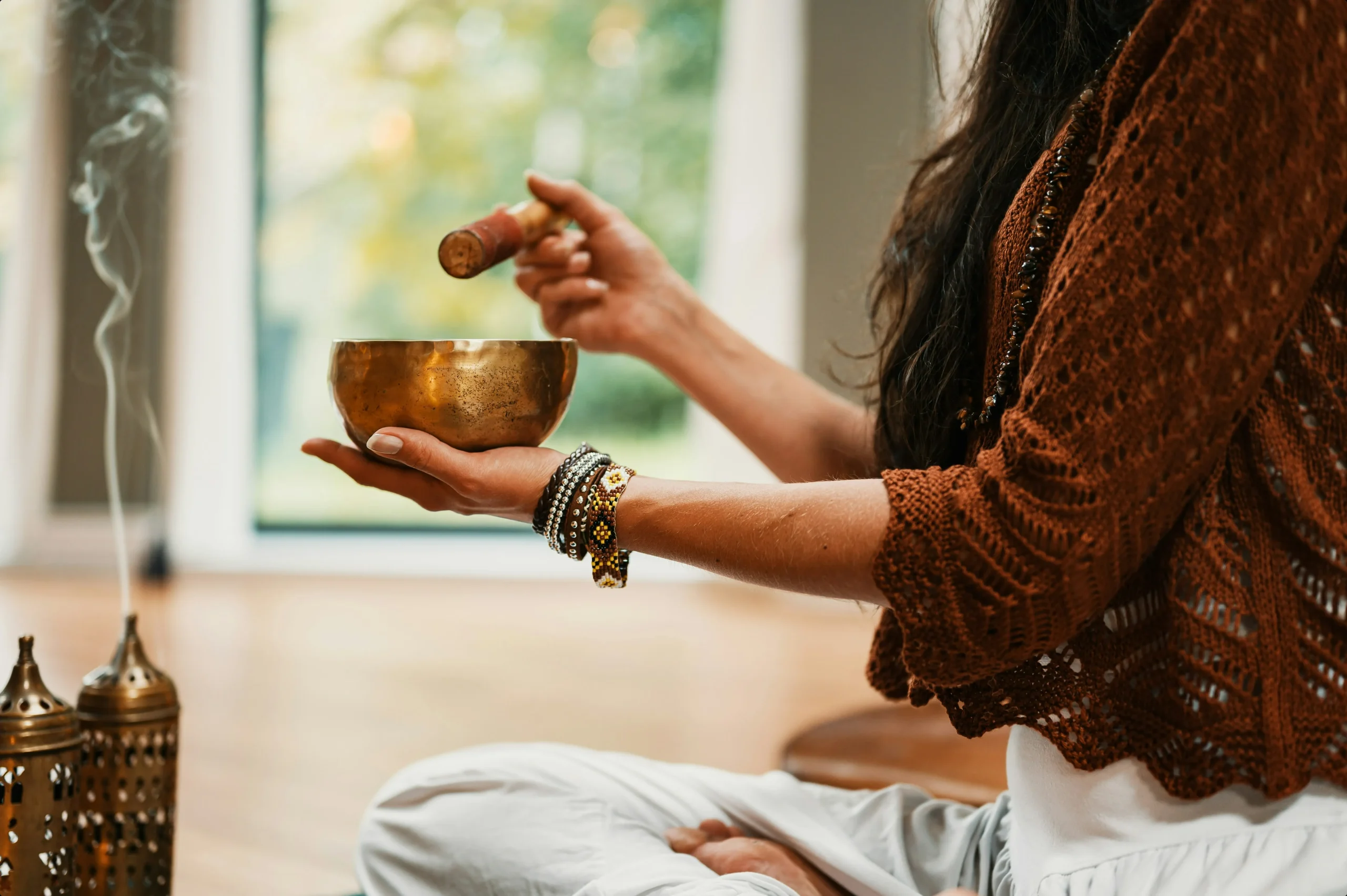
The first thing you notice is not the sound. It is how long the sound stays.
Quick answer
A singing bowl experience in Kathmandu is usually a quiet session built around resonant metal bowls, gongs and other sound instruments. Some sessions are brief introductions; others run for about an hour or longer and are presented as sound baths, meditation sessions or traditional singing bowl experiences. Many travellers describe them as relaxing or immersive, but medical “healing” claims should be treated cautiously: research is still developing and singing bowls should not be considered a substitute for medical care.
What does a singing bowl actually feel like?
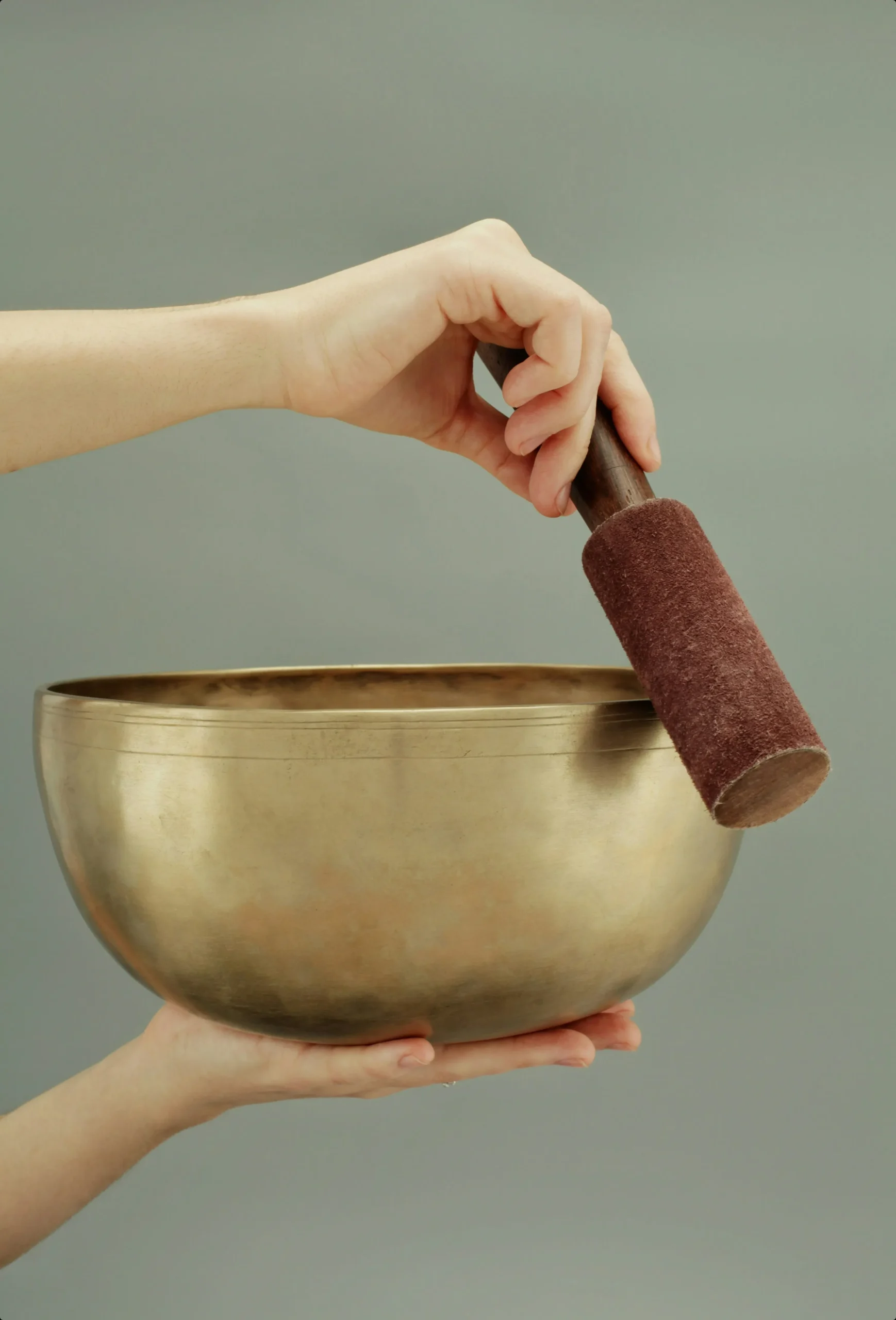
A bowl is struck or played around its rim. The first note arrives clearly, then changes as the vibration expands. A second bowl answers from somewhere else in the room. A gong may add a deeper layer. The sound does not behave like background music because it occupies the space around you for longer than expected.
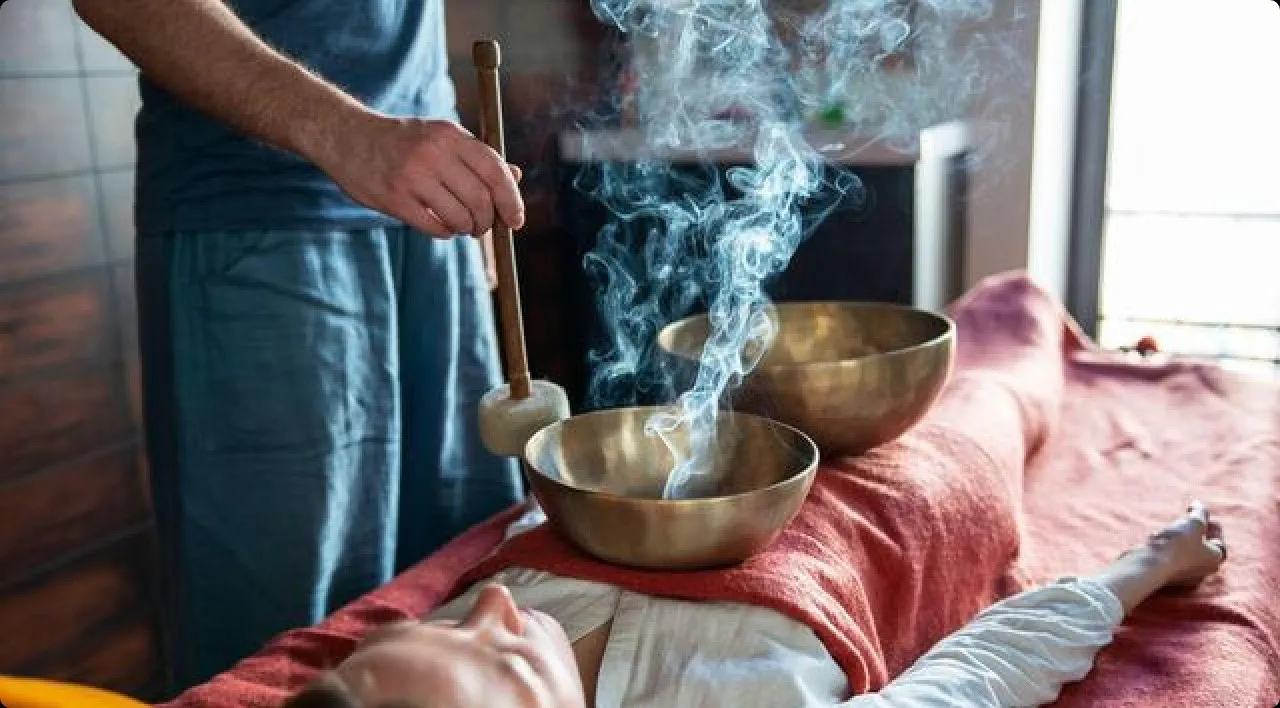
If the bowl is close, you may feel a faint vibration as well as hear the tone. In a sound bath, you normally sit or lie quietly while a facilitator moves between different bowls and instruments. The experience can feel meditative simply because there is very little to do except listen.
That is why it can work so well in a Kathmandu itinerary. After traffic, temples, markets and a full sightseeing day, an hour of deliberate quiet feels unusually noticeable.
Kathmandu can be wonderfully loud. A singing bowl session gives you permission to notice the opposite.
What happens during a sound-bath session in Kathmandu?
Formats vary by centre, but a typical visitor session may begin with a short explanation of the bowls and how they are played. You may then be asked to sit or lie comfortably while the facilitator uses several bowls around the room. Some sessions include gongs, tingsha cymbals, breathing exercises or a short meditation.
Current Kathmandu listings show that visitor sessions commonly run around one hour, while some centres advertise experiences or training lasting one to two hours. Longer courses can focus on playing techniques and structured practice rather than simply receiving a sound bath.
There is no need to “perform” the experience correctly. Some people close their eyes. Others focus on one instrument. Some simply listen and enjoy having a quiet hour between more active parts of their trip.
Why do travellers call it “healing”?
The language around singing bowls can become confusing because tourism, wellness traditions and medical language often overlap. Providers may describe sessions using terms such as sound healing, singing bowl therapy, chakra balancing or vibrational therapy.
There is research investigating possible psychological and physiological effects. A 2025 systematic review found promising signals across several outcomes, while also drawing from a mixed body of clinical studies with different designs and populations. An earlier 2020 systematic review concluded that the evidence was too limited and potentially biased to support clinical recommendations.
For a traveller, the most sensible way to approach the experience is simpler: enjoy it as sound, vibration, meditation or relaxation if that appeals to you. Do not rely on a singing bowl session to diagnose, treat or cure a medical condition.
A sensible way to choose a session
- Choose a facilitator who explains the format clearly rather than promising cures.
- Ask how long the session lasts and whether it is a sound bath, demonstration or training class.
- If you are sensitive to loud sound, tell the facilitator before the session starts.
- If you have a medical condition, pregnancy concern or implanted medical device and the session involves bowls placed on or very close to the body, ask your healthcare professional and the provider about suitability first.
Listening is one experience. Learning to play is another.
A sound bath is mostly receptive: you listen. A singing bowl workshop is more active. The facilitator may show you how different mallets change the tone, how striking differs from circling the rim, and how pressure and speed affect the resonance.
For travellers who are curious about the instrument itself, a short workshop can be more memorable than simply visiting a shop. You begin to understand why two bowls that look similar can sound very different, and why playing one consistently takes more practice than it appears to.
Longer singing bowl training courses are also available in Nepal, but those are better treated as a separate learning commitment rather than squeezed into a sightseeing afternoon.
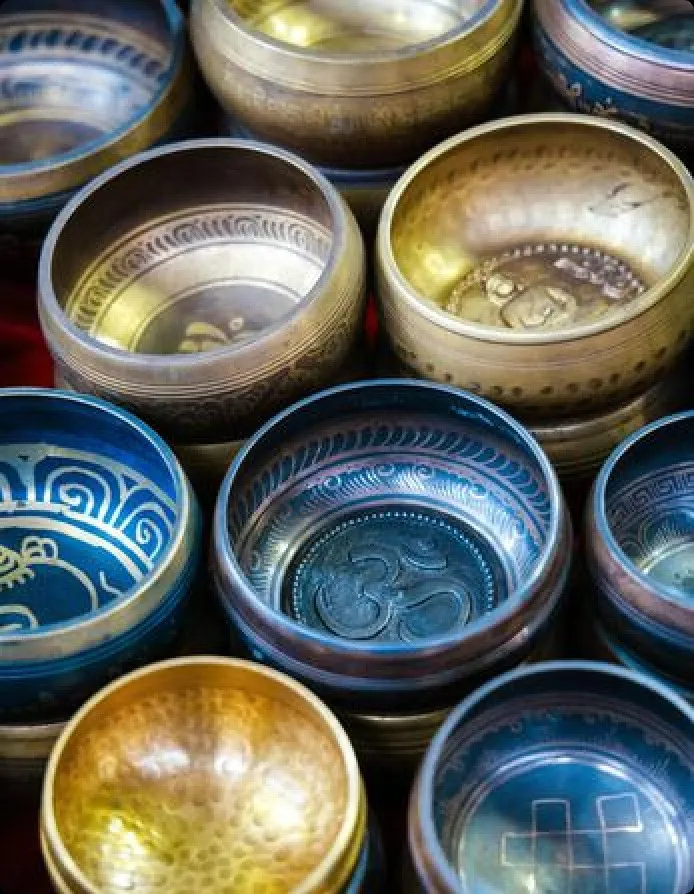
Can you buy a singing bowl in Kathmandu?
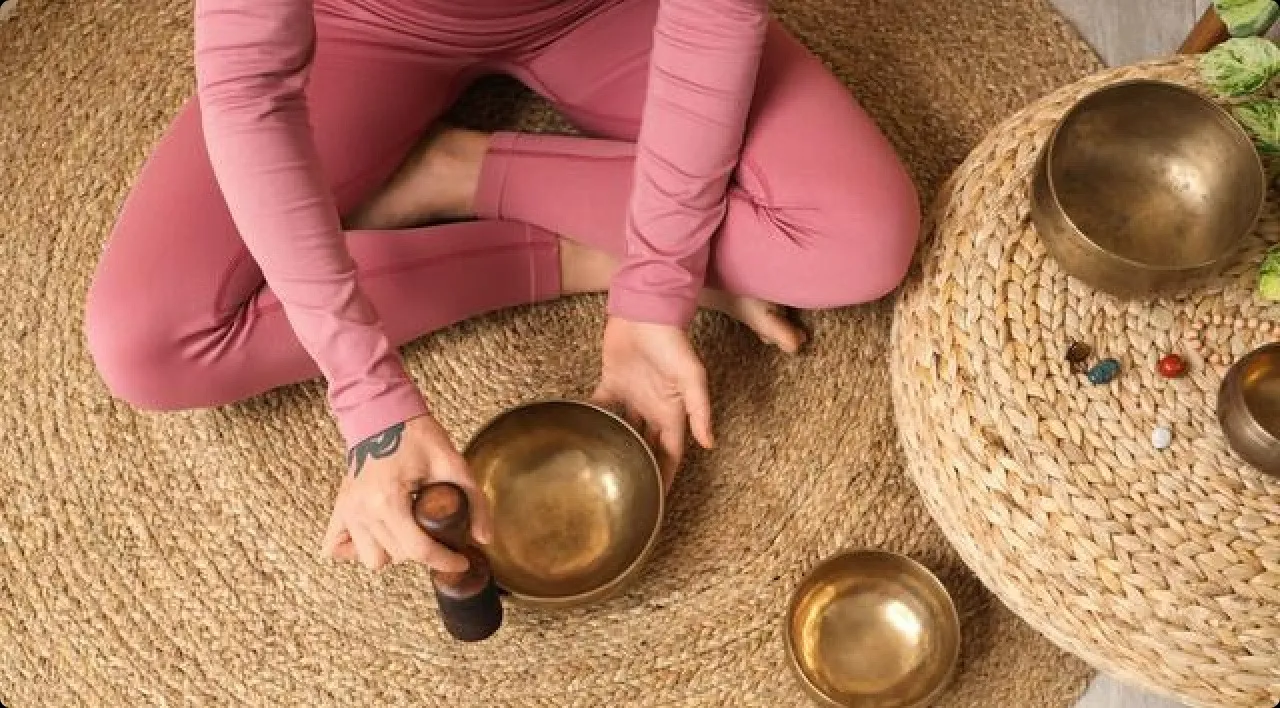
Yes. Singing bowls are widely sold around Kathmandu, particularly in tourist and Buddhist areas. The choice ranges from decorative machine-made bowls to hand-hammered pieces of very different sizes and prices.
Instead of chasing a single “authentic” sound, compare several bowls in person. Ask whether the bowl is handmade or machine-made, listen for a tone you genuinely like, inspect the finish, and ask the seller to demonstrate it. A reputable seller should be comfortable explaining the material, making method and intended use without relying only on stories about mystical metal formulas.
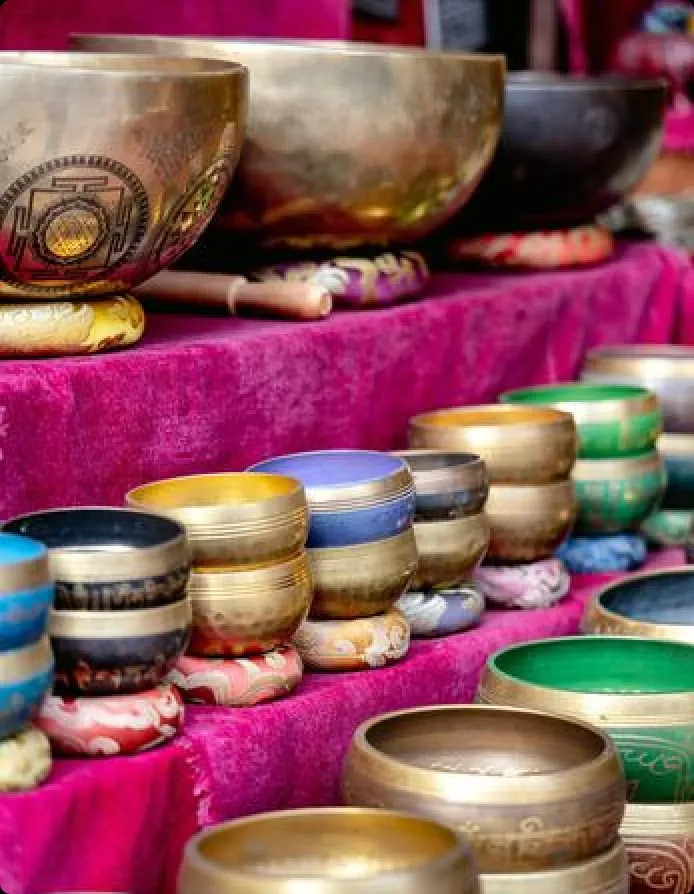
If you plan to fly with a larger bowl, check your airline’s cabin and checked-baggage rules. A small bowl is easier to carry, while larger sets may be more practical to ship.
How to fit a singing bowl experience into a Kathmandu day
Experience note
Give the quiet part of the day its own space
About 60–90 minutes for a visitor-friendly session, plus travel time.
Couples, solo travellers, older children and anyone who enjoys meditation, sound or slower experiences.
Boudhanath, Patan, a light sightseeing afternoon, yoga or a relaxed final evening in Kathmandu.
Confirm session style, duration, group size and whether bowls are placed on the body.
Providers use different terminology. We prefer to book the actual experience you want — listening, meditation, sound bath or learning session — rather than assuming every “singing bowl therapy” listing is the same.
Why this experience belongs in the series
Our Kathmandu momo experience is about making food with your hands. The Bhaktapur pottery class is about clay and patience. Patan’s metal craft is about watching mastery built over generations.
A singing bowl session is different because the participation is quieter. You do not need to make anything. You simply give the experience enough attention to notice it.
That variety is exactly what makes Nepal more interesting beyond sightseeing: one day can be temples and courtyards; another can be food, craft, sound and conversation.
Singing bowl experience Kathmandu FAQs
How much does a singing bowl session cost in Kathmandu?
Current 2026 listings vary considerably by format. Group sessions can be around NPR 2,000 per person, while individual sessions commonly start around NPR 2,500 or USD 25 and can rise to USD 50 or more for private sessions. Premium hotel or spa experiences may cost considerably more. Treat these as indicative examples rather than fixed rates and reconfirm the price for your date.
How much does a singing bowl cost in Nepal?
The retail range is very wide. Small or machine-made bowls can be inexpensive, while larger hand-hammered, carved or specialist bowls can cost tens of thousands of Nepali rupees. Size, weight, workmanship, decoration and sound quality all affect the price, so compare the actual bowl rather than choosing only by a quoted “type.”
How long does a singing bowl session take in Kathmandu?
Visitor sessions commonly last around one hour, although some sound baths, demonstrations or training sessions run longer. Confirm the exact duration with the provider.
Does a singing bowl session really heal medical problems?
Research is ongoing, but current evidence is not strong enough to treat singing bowls as a proven medical therapy. They may be enjoyed as a relaxation, meditation or sound experience, but they should not replace professional medical care.
Do I need meditation experience?
No. A beginner-friendly sound bath generally requires no previous meditation, yoga or music experience.
Can children join?
Older children who are comfortable sitting quietly may enjoy a shorter session. For young children, confirm the duration and sound level with the provider before booking.
Can I learn how to play a singing bowl?
Yes. Some Kathmandu providers offer introductory workshops as well as longer training courses. If learning is your priority, book a teaching session rather than a passive sound bath.
Where should I buy a singing bowl in Kathmandu?
There are many sellers in tourist and Buddhist areas, especially Thamel. Compare several bowls, ask for a demonstration, and choose a seller who can clearly explain whether the bowl is handmade or machine-made and how it was produced.
A quieter Kathmandu memory
Add a singing bowl experience to your Nepal trip
If you would like to include a visitor-friendly singing bowl session in Kathmandu, tell our local team whether you want a sound bath, meditation-style experience or introductory learning session. We can check a suitable current option and fit it into your itinerary without turning the day into a rush.
Ask About a Singing Bowl Experience →
Add it to my itinerary
Evidence note: Singing bowl experiences are widely marketed using wellness and therapy language. Clinical research has reported possible benefits, but systematic reviews also identify limitations in study quality and consistency. This article describes a travel and relaxation experience, not medical treatment.