

The first lesson is not how to eat momo. It is how to close one.
Quick answer
A hands-on momo class in Kathmandu turns one of Nepal’s best-known foods into a small cultural experience: you prepare the filling, roll the wrappers, learn the folds, steam the dumplings and finally sit down to eat what you made. Class formats vary by host, but the experience is generally beginner-friendly and can often be adapted for vegetarian travellers.
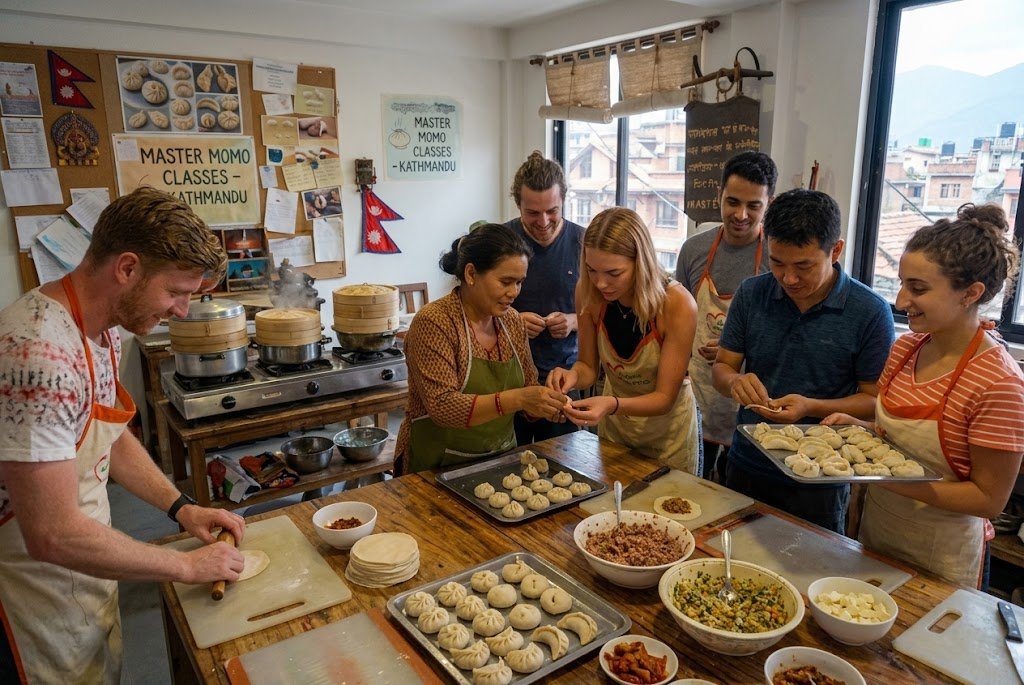
Before the steamer, there is Kathmandu
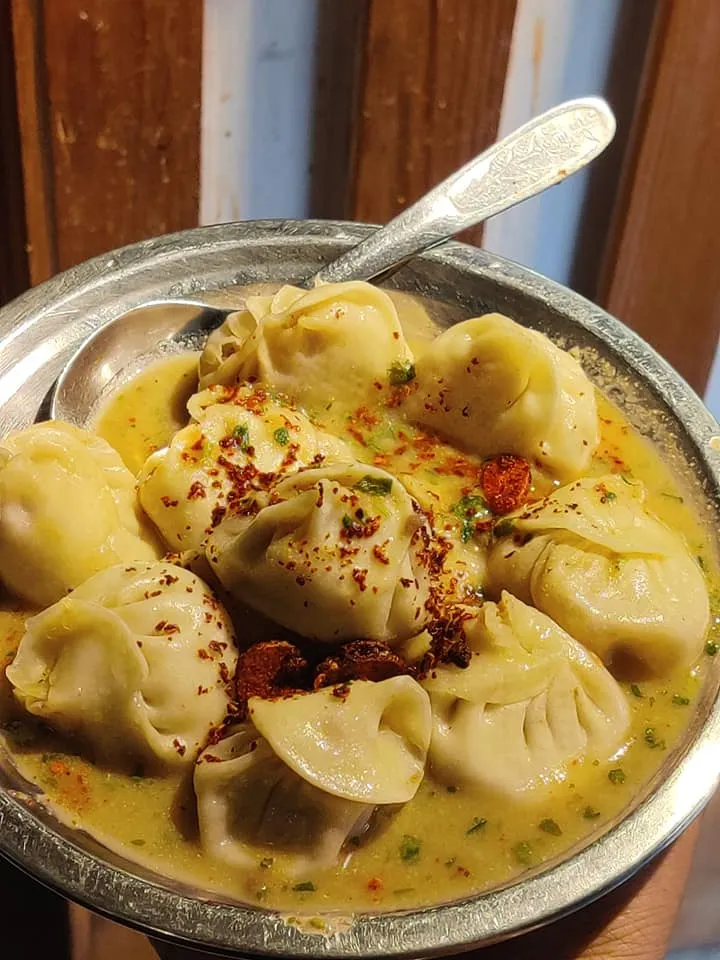
In Kathmandu, momo is not treated like an exotic dish reserved for visitors. It is lunch between errands, an after-school snack, a plate shared by friends, and the food people argue about with surprising seriousness: which filling is best, how thin the wrapper should be, whether the achar needs more heat, and which shape counts as the proper fold.
Nepal Tourism Board describes momo as one of the country’s most popular snacks. Its roots are commonly connected with Tibetan dumpling traditions and old trade links with the Kathmandu Valley, while Nepali cooks gradually made the dish their own with local seasoning, fillings and intensely flavoured achar. The exact origin story has several versions, but the important part is easier to taste than to debate: momo travelled, adapted and became deeply Nepali.
The filling comes first
A good momo class slows down something travellers normally finish in ten minutes.
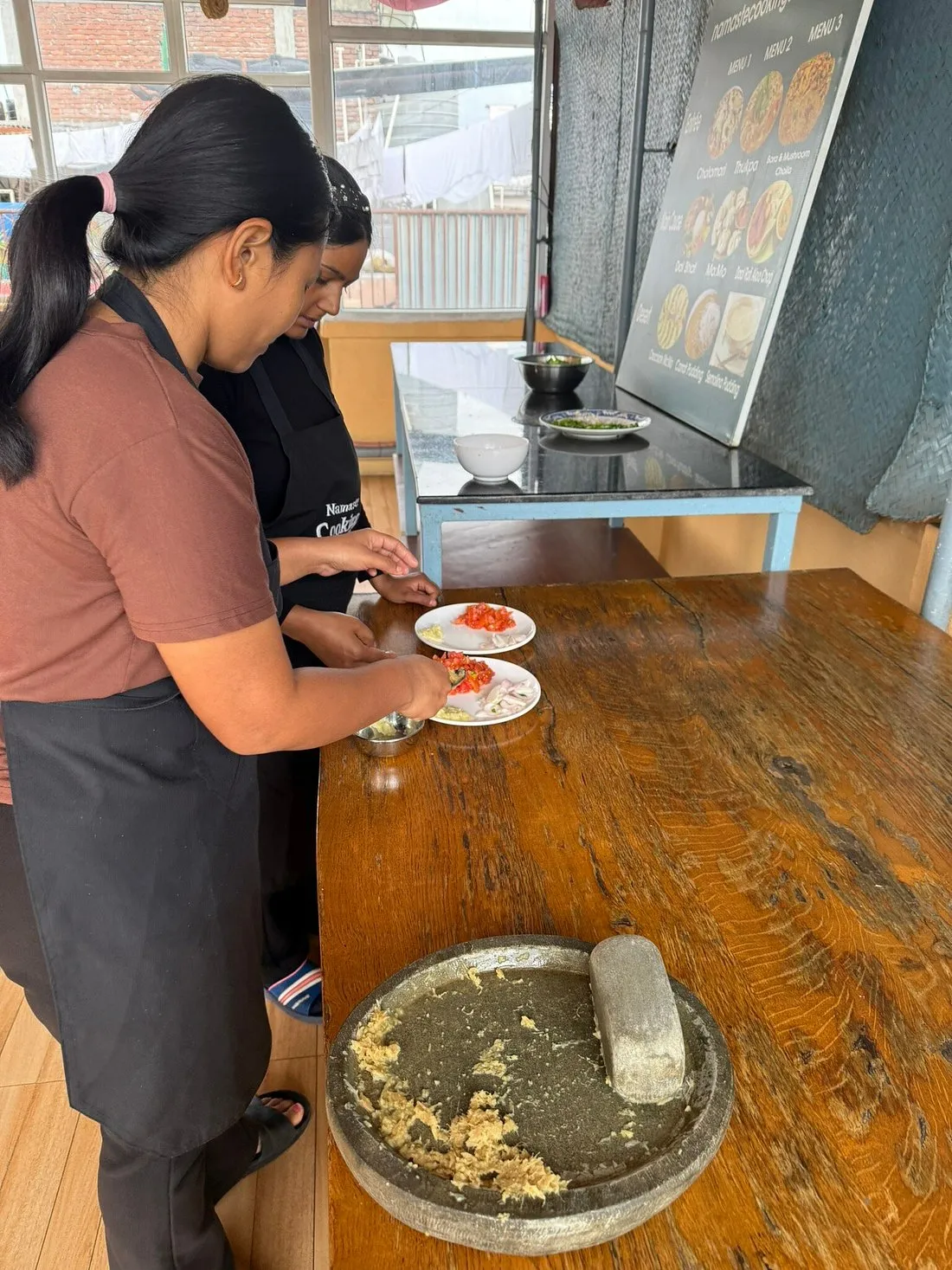
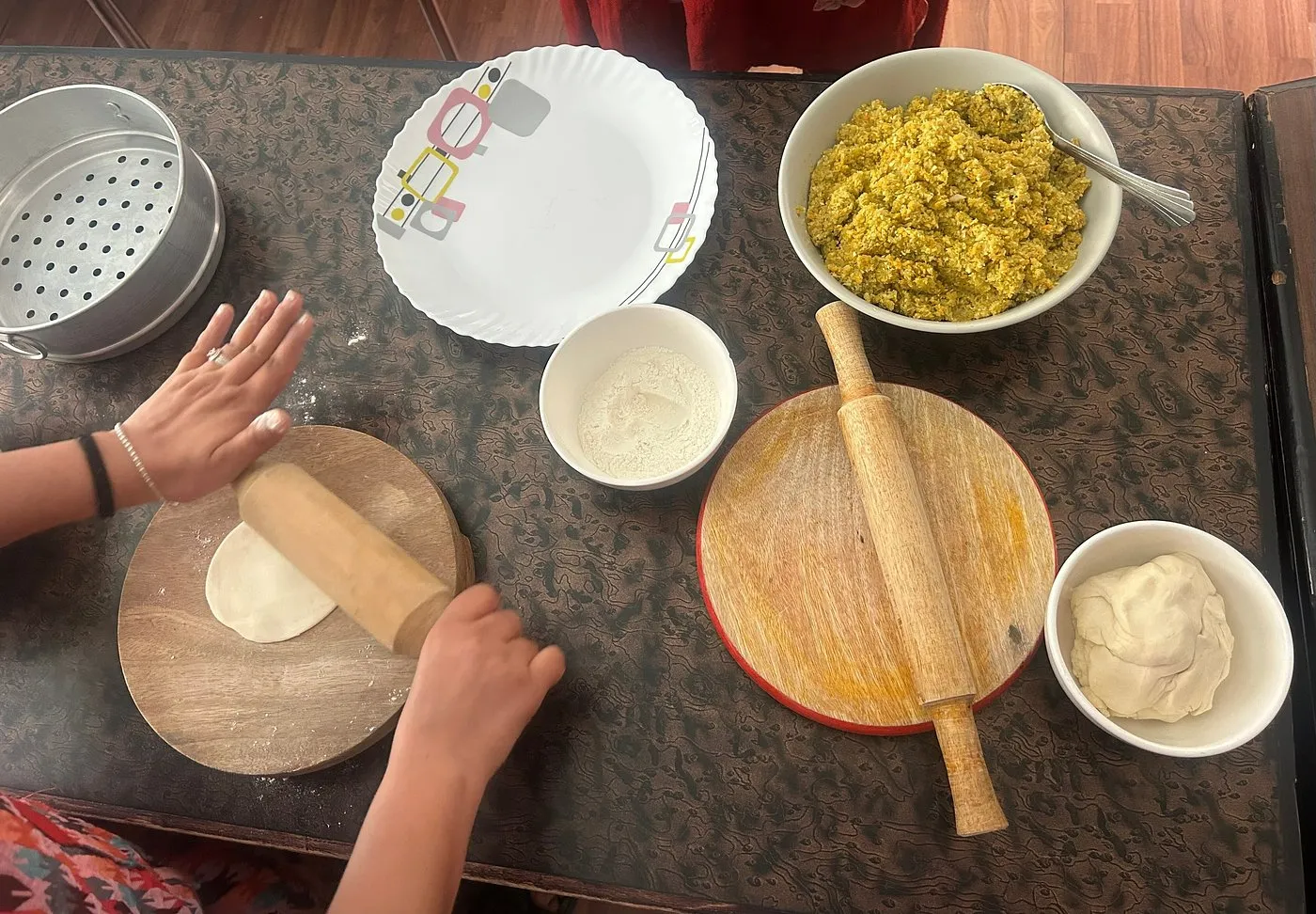
The vegetables are chopped smaller than you expect. Ginger and garlic disappear into the mixture. The seasoning is adjusted by hand rather than by stopwatch. Depending on the kitchen, the filling may be vegetable, chicken, buff, paneer or another variation. What matters is balance: enough moisture to stay tender, enough seasoning to survive the steam, and not so much filling that the wrapper gives up halfway through folding.
This is usually the first moment when a cooking class stops feeling like a demonstration. Someone hands you the bowl. You mix. You taste the seasoning indirectly through the cook’s instructions. You start asking questions.
Then comes the fold
This is where everyone becomes a beginner.
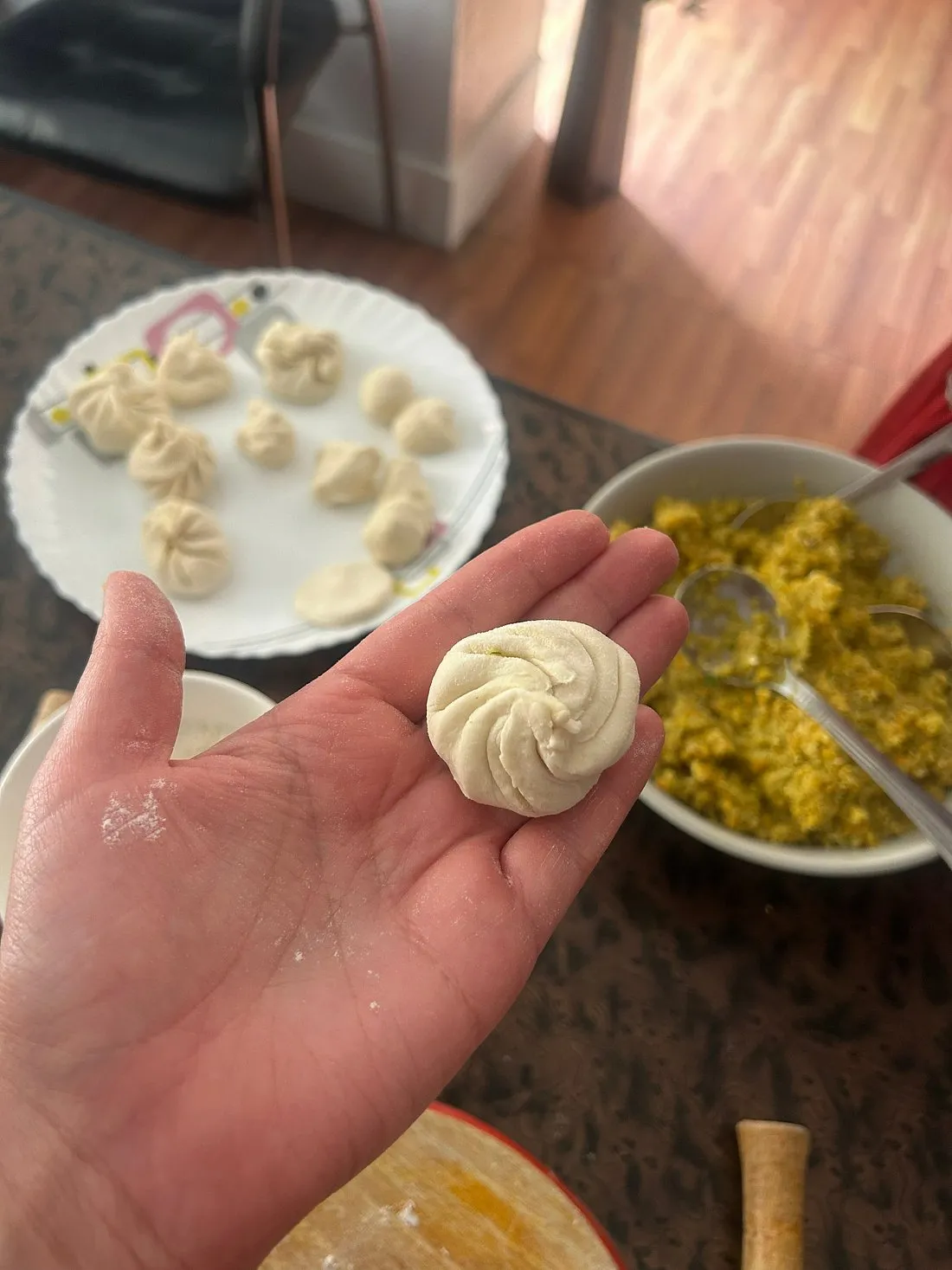
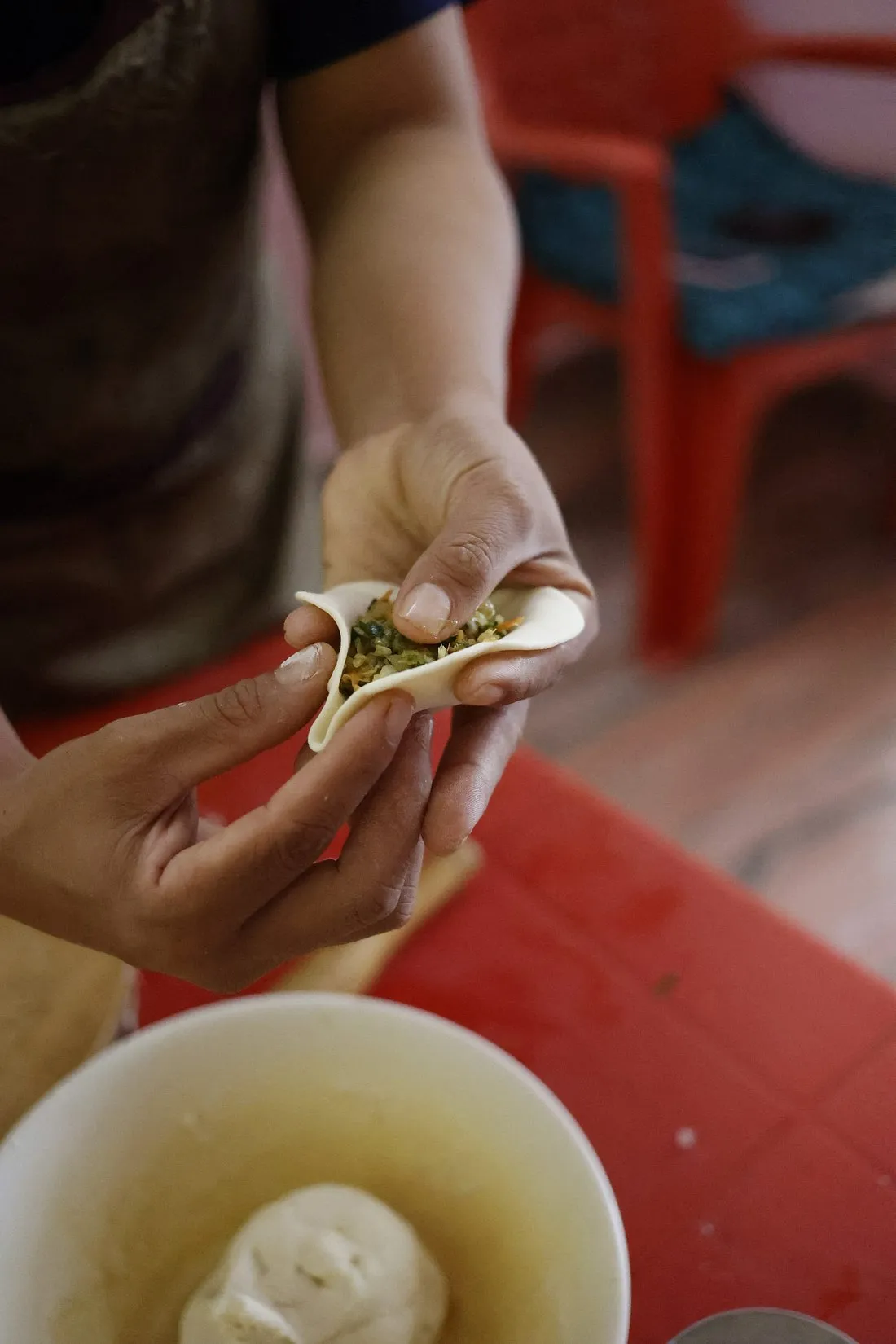
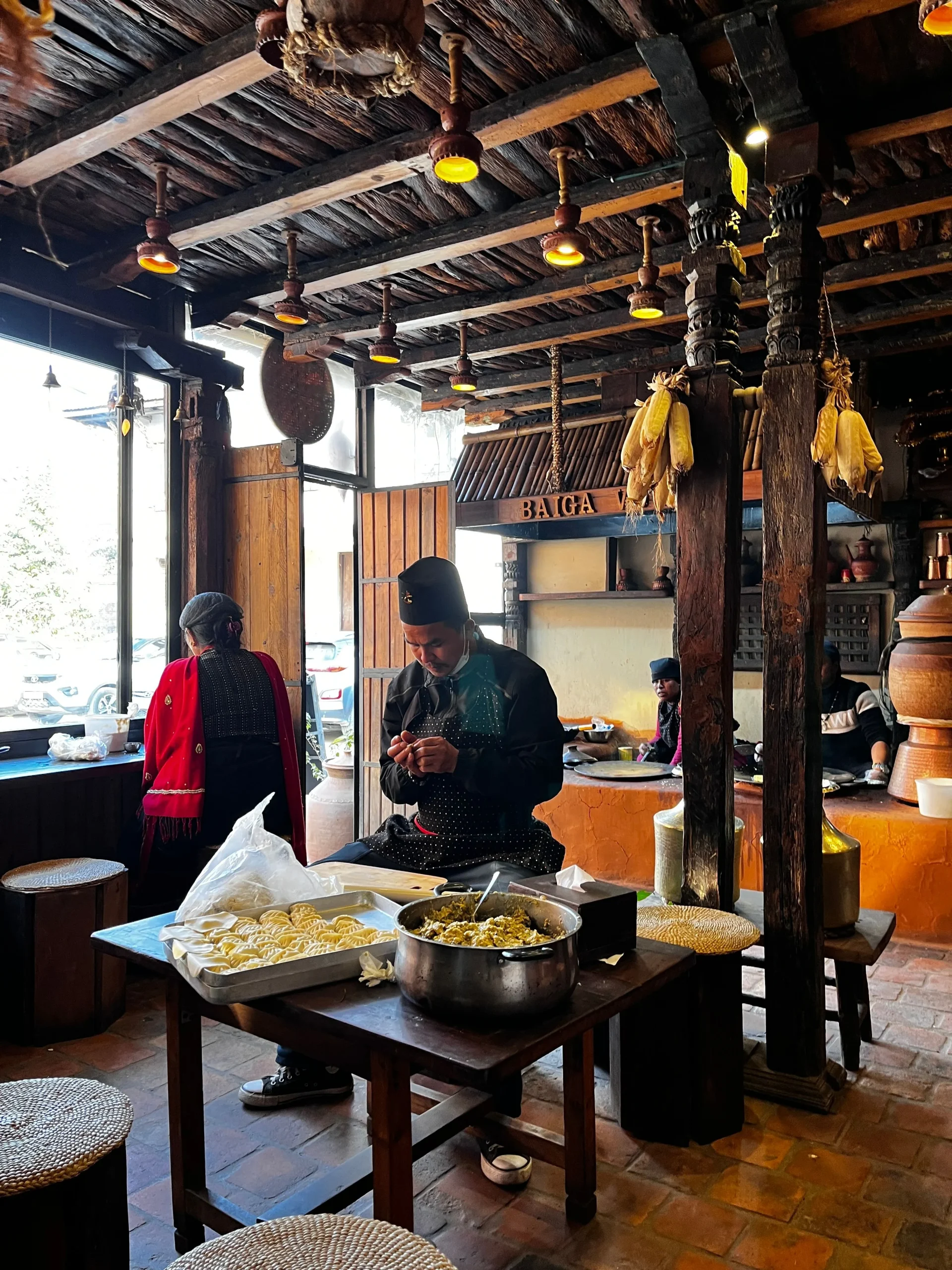
A small circle of dough rests on one palm. A spoonful of filling goes in the centre. Then the fingers begin moving: pinch, turn, pleat, pinch again. The cook’s momo closes neatly. Yours may look like a small purse that survived an argument.
That is part of the experience.
The souvenir is not the dumpling. It is the moment your hands finally understand the fold.
Some kitchens teach more than one shape. Some families have a preferred way of pleating. Nobody needs to be good at it. The small satisfaction of seeing the second momo look better than the first is exactly why this works so well as a travel experience.
The quiet ten minutes
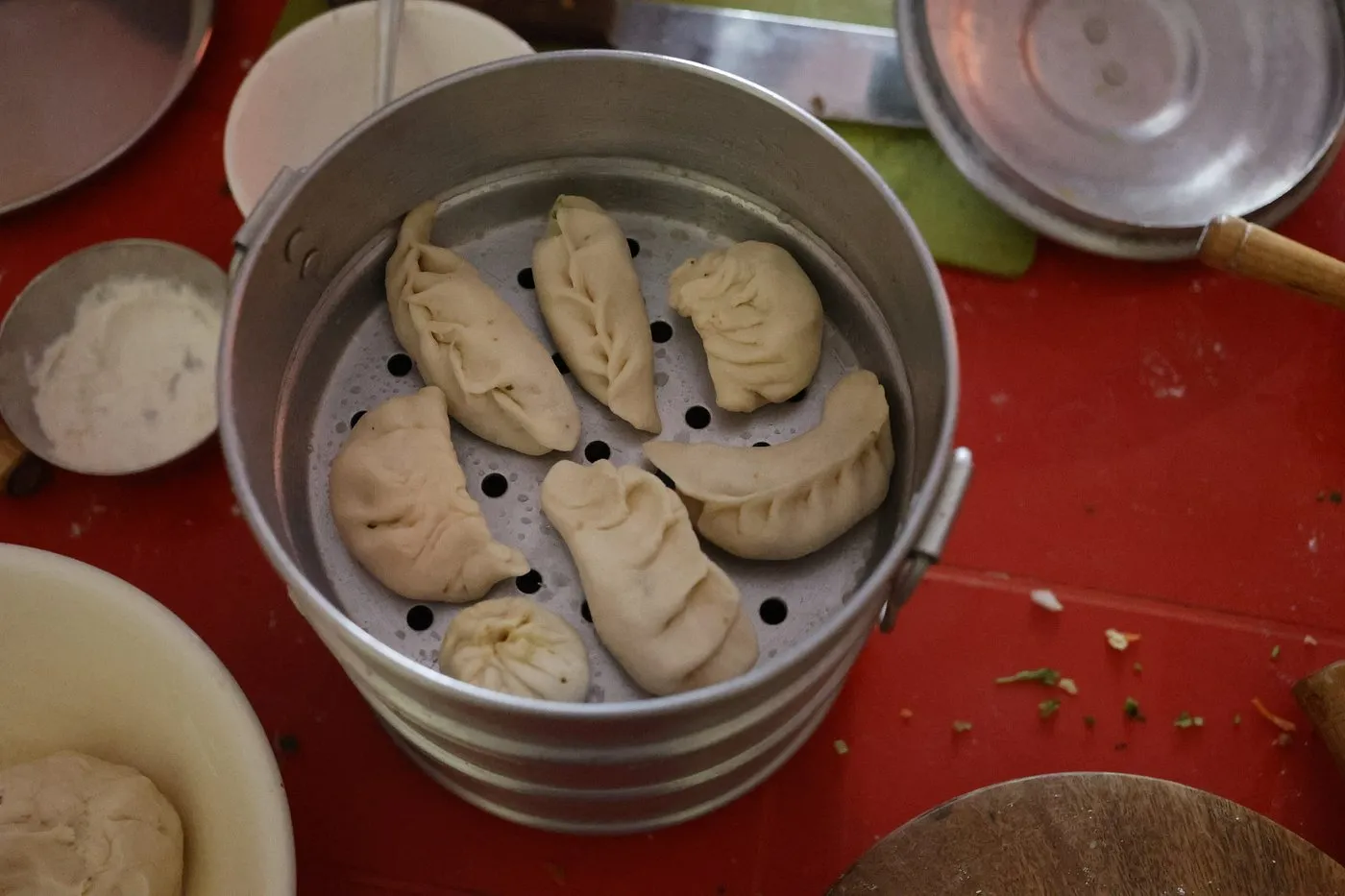
Once the trays are full, the momo disappear into the steamer.
For a few minutes there is nothing left to shape. The room changes. Steam gathers. Tea appears. People talk. This pause is important because the class becomes less about following instructions and more about being in someone else’s kitchen long enough for conversation to happen naturally.
And then there is achar
Momo without achar feels unfinished.
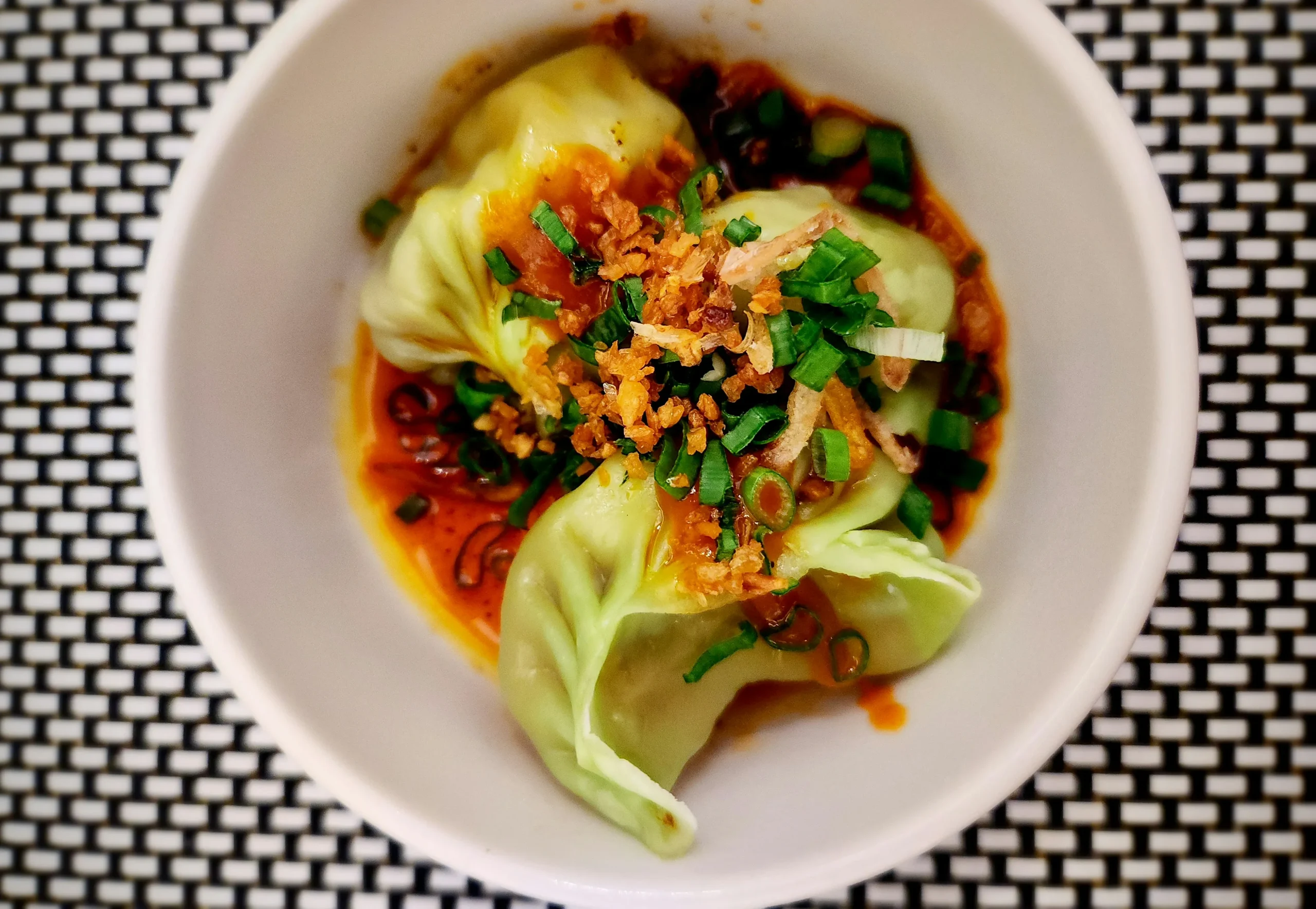
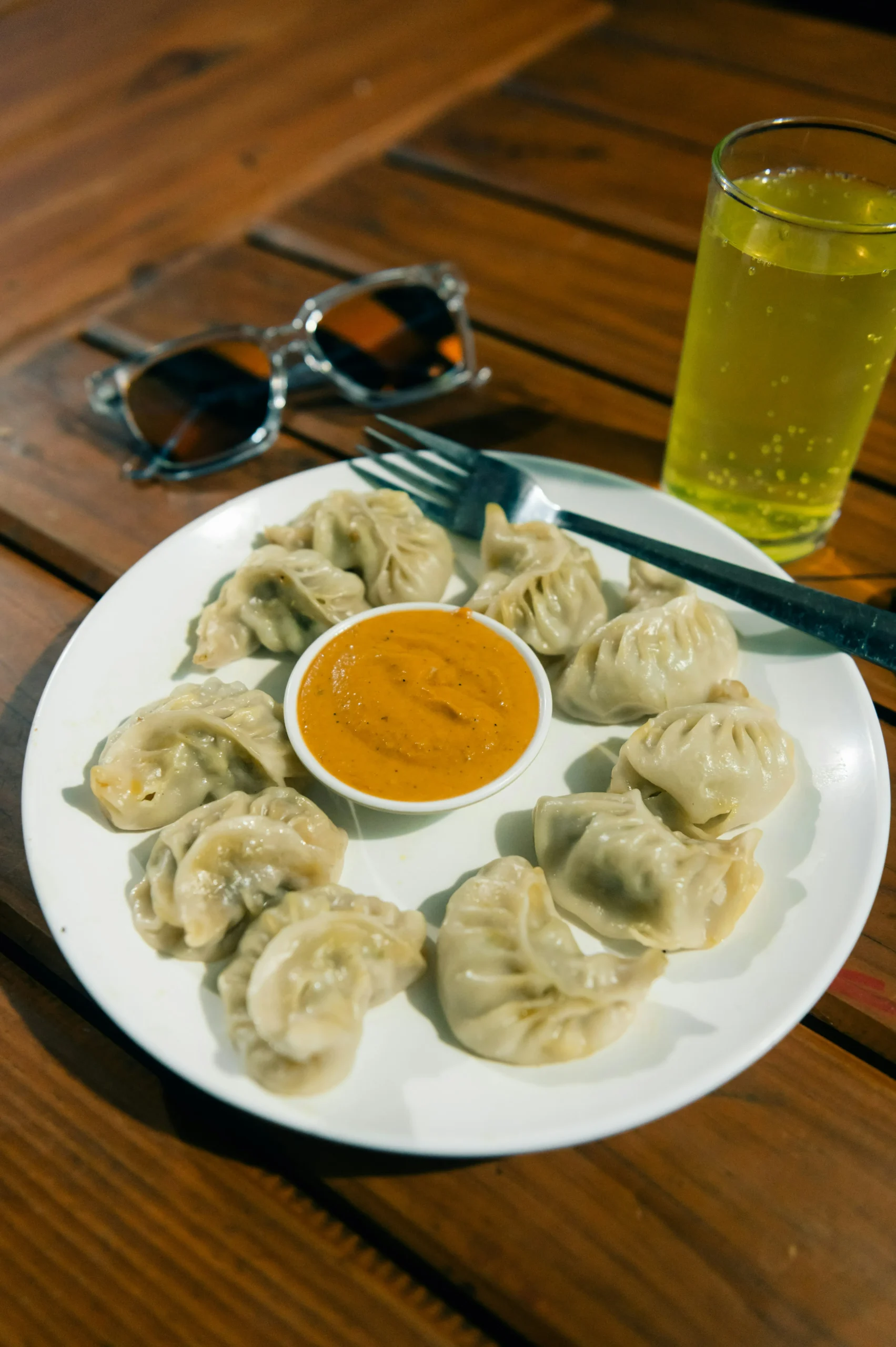
The dipping sauce is often where individual kitchens reveal themselves most clearly. Tomato may form the base. Sesame can add depth. Chilli changes the conversation immediately. Some versions are bright and sharp; others are smoky, nutty or surprisingly gentle.
This is also where a visitor starts understanding why asking for a single “authentic momo recipe” is difficult. There is not one household, one filling or one achar. The dish survives because people keep making it their own.
Why travellers remember this
Kathmandu has temples that are centuries old, stupas that define the skyline and squares filled with extraordinary architecture. You should see them.
But sightseeing mostly asks you to look.
A momo class asks you to participate.
You touch the dough. You make mistakes. Someone corrects your fingers. You laugh at the first attempt. You sit down afterward and eat something that did not exist two hours earlier.
That small shift—from observer to participant—is why experiences like this often become the story people tell after the trip.
Experience note
Can you add a momo class to a Kathmandu itinerary?
Allow roughly half a day including cooking and eating; exact duration depends on the host.
Couples, families, small groups and travellers who enjoy food or hands-on activities.
Vegetarian formats are commonly possible; dietary requirements should be confirmed before booking.
Combine it with a lighter Kathmandu sightseeing day rather than squeezing it between several monuments.
Hosts, menus and availability vary. Neved Holidays can check a suitable current option for your dates rather than treating every cooking class as identical.
Take part, don’t just taste
Make momo, don’t just eat it
If this feels like your kind of Kathmandu memory, our local team can add a hands-on momo cooking class to your Nepal itinerary. Tell us your dates and who is travelling, and we’ll check a suitable current class and fit it into the day without overloading your sightseeing.
Book a Momo Class on WhatsApp →
Add it to my Nepal itinerary
Planning the rest of your trip? Explore our Nepal tour packages.
Context: Nepal Tourism Board identifies momo as one of Nepal’s most popular snacks and includes momo in its heritage cuisine material. Cooking-class formats, menus and dietary options vary by provider and should be confirmed for the travel date.