

The wheel starts moving before your hands know what to do.
Quick answer
A Bhaktapur pottery class is a hands-on cultural experience where travellers can watch local potters work, learn how clay is shaped on a traditional wheel and try making a simple bowl, cup or small pot themselves. Pottery Square is close to Bhaktapur Durbar Square, so the workshop can fit naturally into a half-day or full-day Bhaktapur visit.

Bhaktapur is better when you touch the story
Bhaktapur is famous for temples, courtyards, carved windows and red-brick streets. Nepal Tourism Board also identifies pottery as one of the crafts closely associated with the city. But Pottery Square feels different from a monument because the craft is still happening in front of you.
Clay sits in working piles. Finished pieces dry in the open. A potter’s wheel turns. Someone’s hands press a soft lump into something recognisable in less time than it takes you to understand the movement.
That is the moment sightseeing becomes participation.
At Pottery Square, daily life is the attraction
Bhaktapur Pottery Square is only a short walk from Bhaktapur Durbar Square. The area is also known locally by traditional tole names, and pottery remains part of the neighbourhood’s daily rhythm rather than a performance created only for tourists.
Local artisans shape clay, dry pieces in the sun, prepare items for firing and sell handmade pottery from workshops and small shops around the square. The experience is visually simple but surprisingly absorbing: wheel, water, clay, pressure and patience.
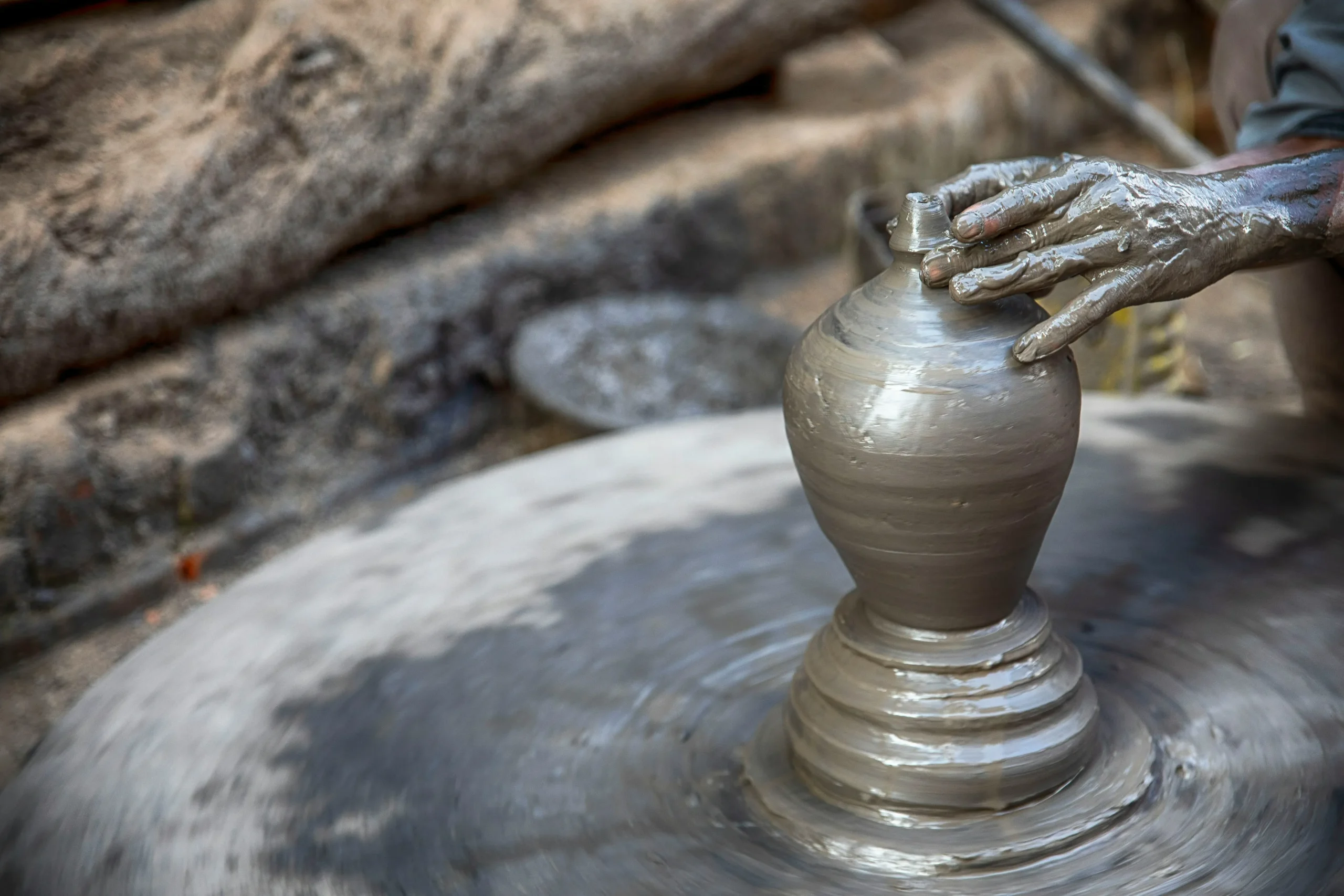
From clay to kiln: how Bhaktapur pottery is made
Traditional pottery is a process, not just a few minutes at the wheel. Clay first has to be prepared so it can be worked evenly. The potter then centres it on the wheel and uses pressure from both hands to open, lift and shape the form. Cups, bowls, pots and vases may look simple, but a clean curve depends on control that comes from years of practice.
After shaping, pieces are left to dry before they can be fired. Around Pottery Square, rows of sun-dried pottery are part of the landscape itself. The finished pieces connect the visitor experience with a much older craft tradition that is still part of everyday life in Bhaktapur and the wider Newar cultural heritage of the Kathmandu Valley.


Then someone asks you to sit at the wheel
Watching a skilled potter makes the process look effortless. Trying it yourself changes that immediately.
You centre the clay. The wheel begins spinning. Your fingers press too hard. The shape leans. The artisan corrects your hands. A few seconds later, what looked like a mistake begins to resemble a small bowl.
The souvenir is not just what you make. It is the moment the clay finally listens to your hands.
That small learning curve is what makes a pottery workshop memorable. You are not simply buying a craft. For a few minutes, you are learning the movement behind it.
Can tourists actually make pottery in Bhaktapur?
Yes. Pottery training centres and local workshops around Pottery Square offer hands-on sessions for visitors. Formats vary: some are short introductory experiences, while others allow more time with an artisan and a fuller pottery-making process.
For most travellers, a short workshop works best when combined with Bhaktapur sightseeing. Families with children often enjoy it because the activity is tactile and easy to understand even without prior experience. Couples and small groups also tend to enjoy the shared, slightly imperfect results.

Experience note
How to fit a Bhaktapur pottery workshop into your day
Around 30–90 minutes for a hands-on session, depending on the workshop format.
Families, couples, small groups, children and travellers interested in local craft.
Bhaktapur Durbar Square, Taumadhi Square, Nyatapola Temple and a local Newari lunch.
Comfortable clothes and shoes you do not mind getting a little dusty.
Workshop timings, prices and whether your finished pottery can be fired or taken away vary by artisan and session. It is better to confirm the current arrangement before travelling.
What can you make?
Beginner sessions usually focus on simple shapes: a small cup, bowl, pot or vase. The exact piece matters less than the process. Traditional pottery takes practice, and one short class will not turn anyone into a skilled artisan.
But it will make you look differently at the rows of handmade pottery drying around the square. Once you have tried keeping clay centred on a spinning wheel, every clean curve starts to look more impressive.
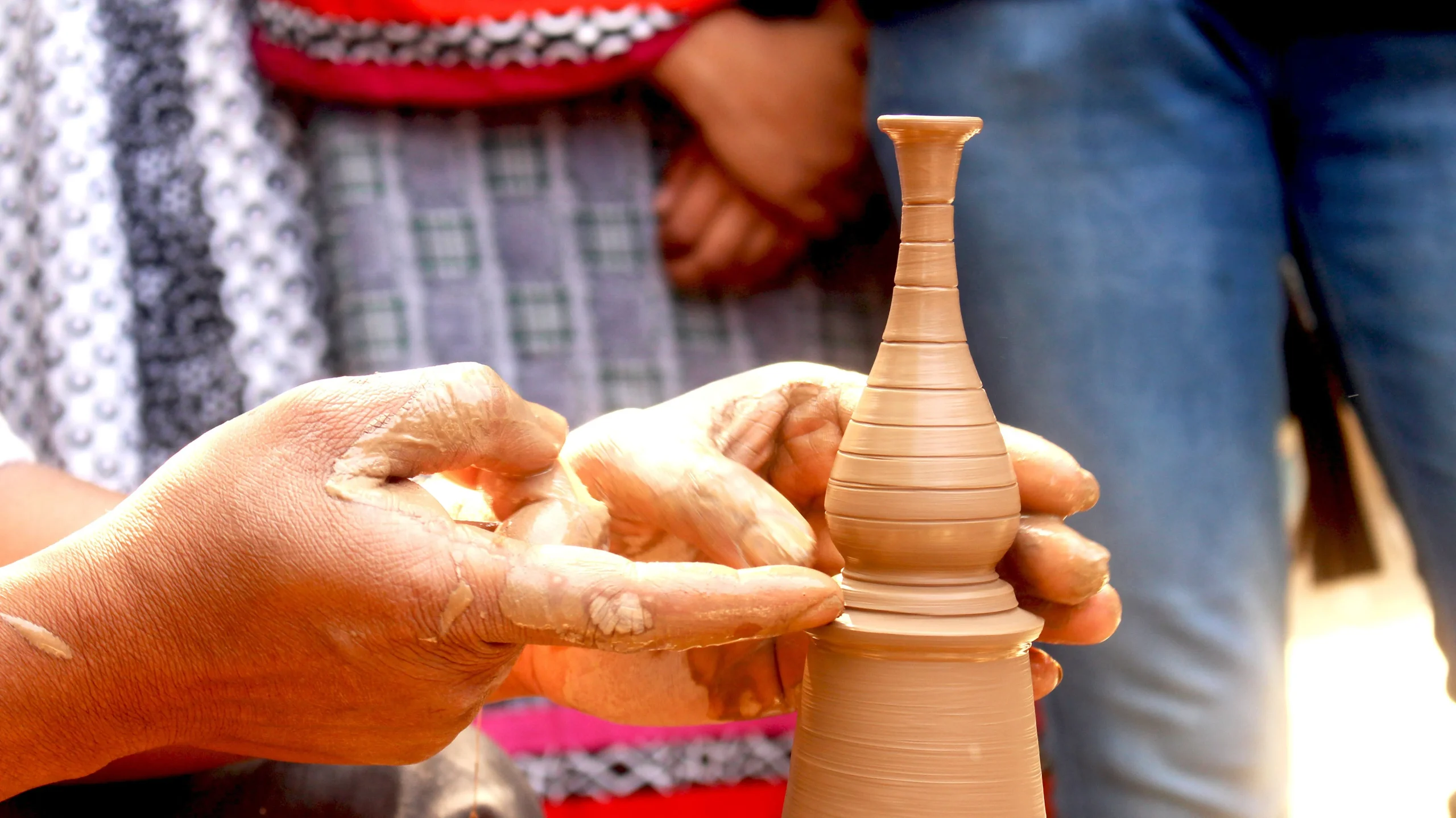
Why this experience works so well with Bhaktapur
Bhaktapur already rewards slow travel. Its lanes, courtyards and craft traditions are easier to appreciate when the itinerary is not rushed. A pottery class gives the day a natural pause between monuments.
Instead of moving from one photo stop to the next, you sit down. You meet someone who practises the craft. You get your hands dirty. You leave with a better understanding of why pottery remains part of Bhaktapur’s identity.
If you enjoy this kind of participatory travel, pair it with our Kathmandu momo-making experience on another day. Together, they turn a Nepal itinerary from something you only see into something you actually do.
Bhaktapur pottery class FAQs
Where is Pottery Square in Bhaktapur?
Pottery Square is within Bhaktapur’s old city and is only a few minutes on foot from Bhaktapur Durbar Square.
How much does a pottery class in Bhaktapur cost?
Prices vary by workshop, class length and what is included. Short wheel experiences and longer guided workshops are priced differently, so current rates should be confirmed for your travel date.
Is a Bhaktapur pottery class suitable for children?
Usually yes, especially for school-age children who enjoy hands-on activities. Parents should confirm the workshop setup and supervision for younger children.
How much time should I allow?
For a simple pottery-making experience, allow roughly 30–90 minutes. A longer craft-focused visit can take more time.
Can I take my pottery home?
Sometimes, but not always immediately. Pieces that need drying and firing may require additional time. Ask the artisan what is possible before starting.
Is Bhaktapur worth visiting beyond pottery?
Yes. Pottery is best treated as one part of a wider Bhaktapur day that can include Durbar Square, Taumadhi Square, Nyatapola Temple, traditional lanes and local Newari food.
Do more than sightseeing
Put your hands on the wheel
If you would like to add a Bhaktapur pottery workshop to your Nepal trip, our Kathmandu team can check a suitable current artisan experience and fit it into your sightseeing day.
Add a Pottery Class on WhatsApp →Plan my Bhaktapur day
Planning the full holiday? Explore our Nepal tour packages.
Planning note: Pottery workshop availability, timing, pricing and take-home arrangements vary by artisan and should be reconfirmed for the travel date.