
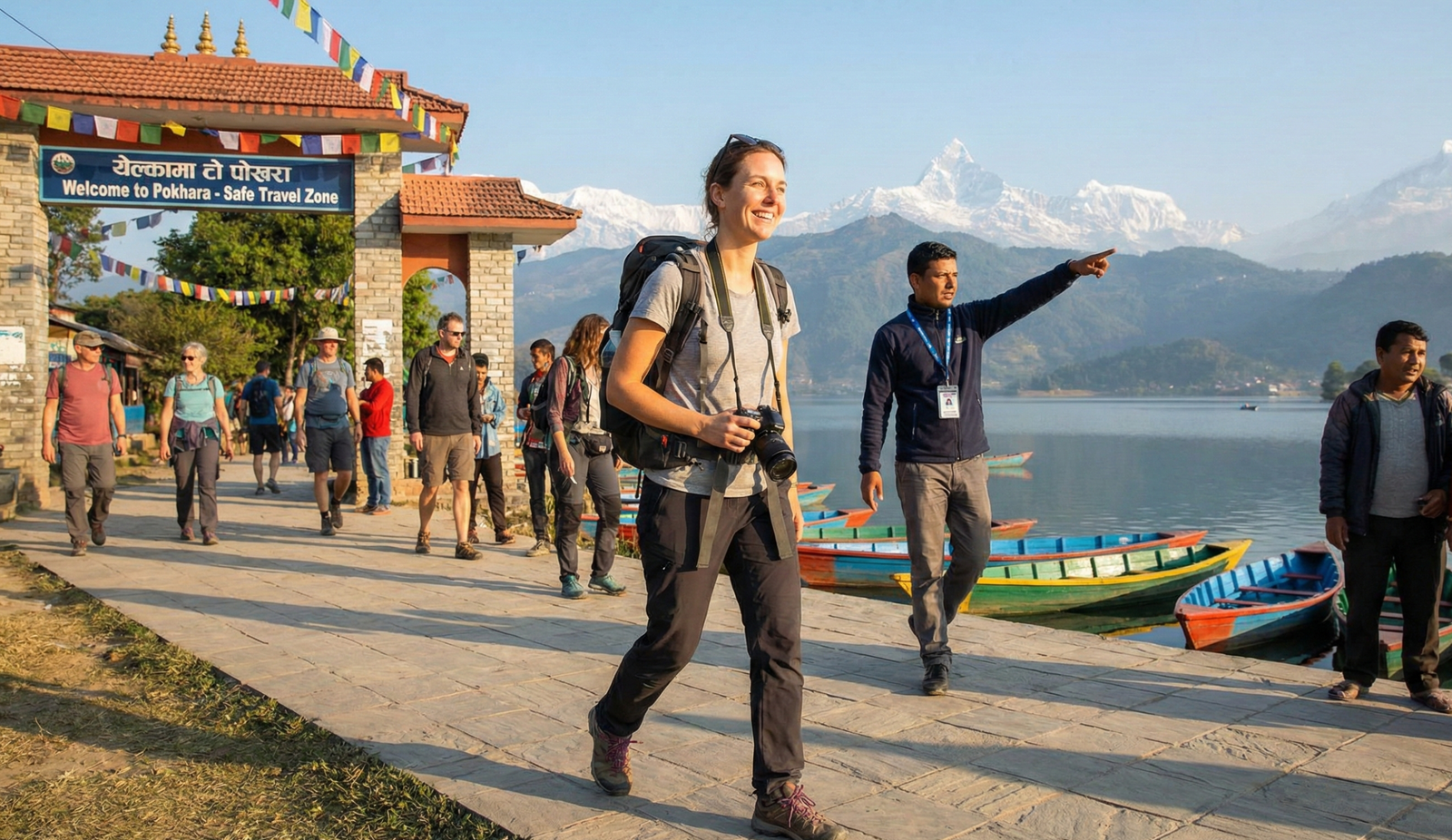
Is Nepal Safe for Tourists? (2026 Update) – Solo Female & Road Safety Guide
Planning a trip to Nepal in 2026 but worried about road conditions, weather or local disruptions? Safety conditions can change by season and district, so use current official advisories alongside local route updates. As of September 4, 2026, the U.S. State Department lists Nepal at Level 2 — Exercise Increased Caution, currently citing natural-disaster risk and specific flood-affected areas. Check the latest advisory before travel.
The Short Answer: Nepal remains open to tourists, but travellers should plan around weather, landslides, road disruption, altitude and any local demonstrations. Conditions can change quickly by district and season, so check current official advisories shortly before travel.
Current Travel Note
September 2026: Recent official advisories highlight natural-disaster risks, including flood and landslide disruption in some areas. Major tourist destinations continue to receive visitors, but route conditions should be checked close to departure. The U.S. State Department currently lists Nepal at Level 2 (exercise increased caution) due to natural-disaster risk, and the Embassy of India in Kathmandu has published emergency contacts for Indian nationals affected by recent flash floods.
For travellers planning this route commercially, our Muktinath tour packages explain the darshan route, transport options and ground arrangements in detail.
1. Political Safety: Are there Protests?
While Nepal has a history of political instability, tourists are almost never the target. Protests usually occur near government buildings (Singha Durbar) and rarely affect tourist hubs like Thamel or Lakeside.
- The “Bandh” (Strike) Rule: If a strike is announced, long-distance buses may stop. However, Tourist Plates (Green Plate Vehicles) and flights usually operate normally.
- Advice: Avoid large political rallies, just as you would in any country.
2. Solo Female Travel Safety
Many women travel independently in Nepal, but personal-safety precautions still matter. Use registered transport, avoid isolated areas late at night, keep accommodation details shared with someone you trust, and follow current local guidance.
- Safe Zones: Thamel (Kathmandu) and Lakeside (Pokhara) are safe to walk around even at 10 PM.
- Trekking: In 2026, the government made it mandatory to have a guide for certain treks. We recommend hiring a licensed guide for safety in remote areas.
3. Road Conditions (The Real Risk)
Honestly, the biggest risk in Nepal right now is not crime—it is the roads. The major highway expansion projects (Mugling-Pokhara) are ongoing in 2026.
| Route | Condition (2026) | Recommendation |
|---|---|---|
| Kathmandu to Pokhara | Under Construction (Dusty) | Take a Flight (25 mins) to avoid 8-9 hours of bumps. |
| Kathmandu to Chitwan | Moderate Traffic | Tourist Bus or Private Car is fine. |
| Kathmandu to Ramechhap | Winding Mountain Roads | Start early (2 AM) for Lukla flights. |
4. Altitude Sickness (AMS)
If you are flying to Muktinath or trekking to Everest Base Camp, altitude is a real danger. Do not ignore headaches or dizziness.
- Prevention: Drink 3-4 liters of water. Do not rush.
- Rescue: Helicopter rescue is available but expensive ($3,000+). Ensure you have travel insurance.
🛡️ Travel with Peace of Mind
Worried about road safety or scams? Our Luxury Tour Packages use only new model SUVs (Scorpio/Toyota) with experienced drivers and include 24/7 ground support.
Emergency Numbers
- Tourist Police: 1144 (English spoken)
- Police (General): 100
- Ambulance: 102
For customized safe travel plans from India, check our Ahmedabad to Nepal or Kolkata to Nepal packages.
Planning a Nepal Trip from India?
Our Kathmandu team creates free custom itineraries for Indian travellers. Pilgrimage, family, honeymoon and adventure. WhatsApp us for a same-day response.