
Why are cars expensive in Nepal? Import duties and other taxes are a major reason, but that is only half the story for visitors. When an Indian family books private road transport in Nepal, the quotation also covers a vehicle and driver operating on mountainous roads, with time, maintenance, logistics and luggage requirements that a simple per-kilometre comparison can miss. The arrival of electric vehicles (EVs) is changing the economics of driving in Nepal. Does that mean Nepal holiday transport is becoming cheaper? The answer depends on the route.
Updated 18 October 2026 for fiscal year 2083/84 (2026/27). Tax rules can change; confirm vehicle-specific rates and commercial registration with the relevant authorities.
Quick answer: why are vehicles so expensive in Nepal?
Nepal imports most of its passenger vehicles. Their retail price includes the vehicle’s purchase value, freight and insurance, customs duties, applicable excise or other levies, VAT, distribution and dealer expenses. The 2026/27 customs schedule sets an important difference between typical imported petrol cars and electric passenger cars. The price of a tour vehicle is then affected by the costs of operating it: driver expenses, tyres, servicing, insurance, financing and depreciation, as well as the time required on Nepal’s winding highways.
For tourists, the key distinction is this: the purchase price of a car influences operating costs, but the fare for a private Nepal tour is a service price, not just a fuel bill.
Nepal electric vs petrol car taxes in 2026/27
Nepal changed its passenger EV import-tax structure in the 2083/84 budget. Previously, EV customs and excise brackets were heavily linked to motor power measured in kilowatts. Under the revised system, passenger EVs generally have 20% customs duty, with a Clean Infrastructure Investment Fee (CIIF) tied to customs value, replacing the earlier EV excise structure. Typical passenger petrol cars are subject to 80% customs duty under the relevant 2026/27 tariff classifications, with further taxes and charges that depend on the vehicle.
| Factor | Electric passenger car | Petrol passenger car |
|---|---|---|
| Basic powertrain | Electric motor and battery | Combustion engine |
| Headline customs duty | 20% | Generally 80% |
| Other import charges | CIIF, VAT and applicable road-related charges | Excise, VAT and applicable road-related charges |
| Import tax basis | Vehicle customs value and classification | Vehicle classification and engine characteristics |
| Annual provincial road-tax basis | Motor output in kW | Engine size in cc |
| Operating energy | Electricity; needs planned charging | Petrol; needs refuelling |
Important: 20% and 80% are customs-duty rates, not a car’s complete tax burden. The actual on-road or showroom price includes other levies and commercial costs. For primary information, consult the Department of Customs tariff 2026/27 and Integrated Tariff 2083/84.
Is Nepal’s electric car tax based on kW, horsepower or battery capacity?
These three measurements are often confused. kW (kilowatts) measures electric motor power. Horsepower is another unit of power; approximately 1 kW equals 1.34 horsepower. kWh (kilowatt-hours) measures stored battery energy, not motor strength. For example, a 60 kWh battery does not mean a car has a 60 kW motor.
For the 2026/27 passenger EV import framework, customs value is the central factor for the new value-linked EV levy rather than the earlier motor-power brackets. However, annual road tax can still be based on motor power in kW, and rates differ by province. This distinction matters for buyers comparing EV specifications, but a tourist hiring a car does not separately pay the import duty or annual vehicle tax: those are among the ownership costs that may influence an operator’s pricing.
What is the Clean Infrastructure Investment Fee?
CIIF is a levy introduced in the revised EV-tax framework. The rate changes by a passenger EV’s import or customs value; lower-value cars face a lower levy, while premium vehicles can face substantially higher rates. The relevant value is the customs valuation, commonly described as cost, insurance and freight (CIF), not the car’s advertised Nepal showroom price. VAT and other applicable fees can increase the final cost further.
The new levy schedule was revised during the 2026 rollout. For a particular model, compare the enacted Finance Act and customs declaration rather than calculating from a dated social-media chart. The policy change and importer concerns were reported by The Kathmandu Post on 30 May 2026 and 1 June 2026.
Why is Nepal private vehicle hire not simply a fuel calculation?
A visitor may compare the distance between two cities and ask why a private transfer costs more than expected. Several operational factors matter, especially for travel agents building fixed itineraries for Indian families and pilgrimage groups.
Mountain travel uses more driver time
Unlike a straight expressway drive, the Kathmandu–Pokhara journey includes hills, bends, traffic and changing road conditions. A journey can occupy much of the day even when its kilometre figure looks modest. A responsible quotation accounts for realistic driving time and rest stops rather than assuming every kilometre is equally fast.
Maintenance and reliability matter
Tyres, brakes, suspension, servicing, insurance and depreciation are real operating costs. For commercial tourism use, a reliable and suitable vehicle matters far more than presenting the lowest headline daily fare. A late vehicle or inadequate luggage space can disrupt multiple parts of a holiday.
Not every seven-seater carries seven people with luggage
Using the third row in an SUV can substantially reduce boot space. For a family carrying suitcases, a vehicle marketed as seven-seat may be more practical for a smaller group. This is why passenger count and luggage need to be checked together, especially on airport transfers and multi-city journeys.
Empty returns, parking and driver allowances add up
A car that drops guests in Pokhara and returns empty still has fuel or charging expenses and driver time. Multi-day itineraries can involve driver overnight allowances, parking and service commitments. Some routes may also require a different local vehicle. The exact inclusions should be clarified before comparing quotations from two operators.
Electric vs petrol vehicles for Nepal tourism: which works best?
There is no single winner for every road in Nepal. EVs often offer smooth, quiet driving and lower energy costs on suitable routes. Petrol vehicles can be refuelled relatively quickly and may provide more flexible logistics where charging is uncertain. Compare the actual vehicle and itinerary rather than treating ‘EV’ or ‘petrol’ as a guarantee of comfort, safety or price.
| Touring situation | What to consider |
|---|---|
| Kathmandu sightseeing | Urban comfort, air-conditioning, parking and accessibility; either type can be suitable |
| Kathmandu–Pokhara | Real-world hill range, charging breaks, traffic, driver time and luggage |
| Kathmandu–Chitwan | Highway travel time, stops, comfort and availability of support |
| Multi-city family tour | Passenger count, practical luggage room and whether the same vehicle serves every day |
| Muktinath or demanding mountain roads | Road access, weather, appropriate local vehicle and alternative transport arrangements |
Can an electric vehicle travel from Kathmandu to Pokhara?
It can, provided the specific EV has adequate real-world range and charging stops are planned. Advertised mileage or range is not the same as performance with several passengers, luggage, steep gradients, air-conditioning and heavy traffic. Check working chargers and planned travel breaks for your dates. An operator should not promise a particular arrival time purely from a manufacturer’s range figure.
What about Pokhara, Chitwan and Muktinath?
For mainstream routes involving Kathmandu, Pokhara and Chitwan tour packages, both powertrain types may be workable. More remote trips deserve special care: road conditions, weather, route accessibility and local vehicle requirements may determine whether a jeep, different road vehicle or flight-and-road arrangement is appropriate. See our Nepal pilgrimage travel guide for related itinerary planning.
Will cheaper EV running costs reduce Nepal tour package prices?
Possibly on some itineraries, but not automatically. Electricity can cost less than petrol for the same useful trip, but an operator also carries vehicle finance, insurance, depreciation, maintenance, staff and overheads. Premium EV purchase costs, charging downtime or reduced practical luggage capacity can offset some energy savings. Rental prices also depend on vehicle availability and seasonal demand.
Travellers should compare the total confirmed price and inclusions, not only the energy source. Ask whether the service covers airport transfers, scheduled sightseeing, driver and vehicle overnight expenses, waiting time, parking, and route-specific local transport. Read about typical planning considerations in our Nepal tour cost calculator.
How should Indian families choose a private tour vehicle?
- Couples: a suitable sedan can be convenient, but verify luggage capacity and road suitability.
- Families with children: prioritise usable luggage space, seating comfort and break planning over an advertised seat count.
- Older travellers: ask about step-in height, legroom, breaks and minimising vehicle changes.
- Groups: a suitable van, Hiace or tourist bus may provide a better practical fit than multiple smaller vehicles.
- Hill and pilgrimage tours: confirm accessibility, road conditions and appropriate local vehicle requirements before departure.
For India-origin planning, see our guide to travelling to Nepal from India.
For a practical breakdown of seating and luggage, read our Nepal tour vehicle guide: sedan vs SUV vs Hiace vs bus.
Frequently asked questions
Why are cars costly in Nepal compared with India?
Nepal relies heavily on imports, and vehicle prices reflect customs duties, other levies, VAT, shipping, distribution and business costs. Comparing two cars requires the same model specifications, tax treatment and currency basis.
Is Nepal’s EV import tax based on horsepower?
No. For FY 2083/84, passenger EV import taxation principally uses customs value and the applicable EV levy. Annual provincial road tax can still depend on motor output in kW. HP and kWh are not the same thing.
Are EVs cheaper than petrol cars in Nepal?
Not in every price category. Purchase prices depend on import values, taxes and models. Day-to-day electricity expense may be lower, but overall ownership also includes depreciation, finance, insurance, maintenance and charging arrangements.
Is a petrol or EV better for Nepal family tours?
Both can be practical. The right choice depends on available vehicle, passenger number, luggage, road suitability, charging or refuelling access and support arrangements on the chosen route.
Why does a private Nepal tour cost more than a fuel estimate?
A private tour pays for a dedicated vehicle and driver plus route logistics, maintenance, registration, insurance, waiting, parking and potential empty return journeys. The quote should clearly identify what is included.
Plan your Nepal road trip with an on-ground team
Neved Holidays is a Kathmandu-based Nepal destination management company serving Indian travel agents and travellers. We help families, couples, groups and pilgrims select suitable ground arrangements across Kathmandu, Pokhara, Chitwan and Muktinath based on routes, passenger count, luggage and practical road conditions. Our goal is to make the transport element of your Nepal holiday clear before you travel.
Explore our Nepal tour packages or request a customised transport-inclusive itinerary with your dates, passenger details and preferred destinations.
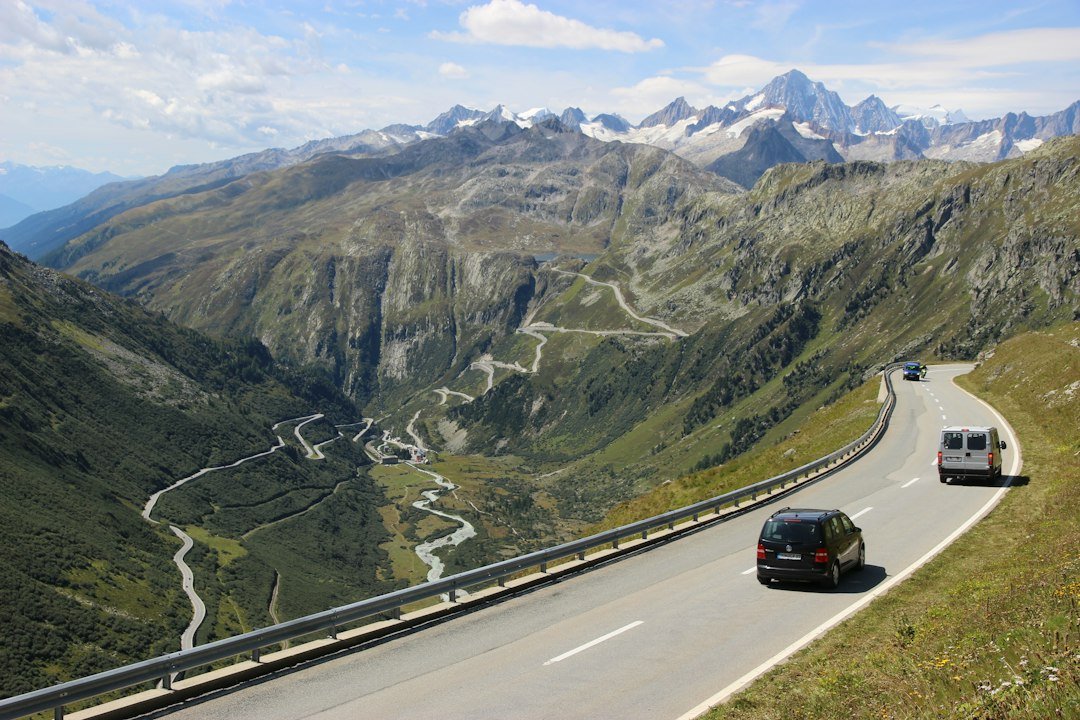
Featured photo: Tanya Nedelcheva / Unsplash. Illustrative mountain-road photography; not a photograph of a Nepal road.